
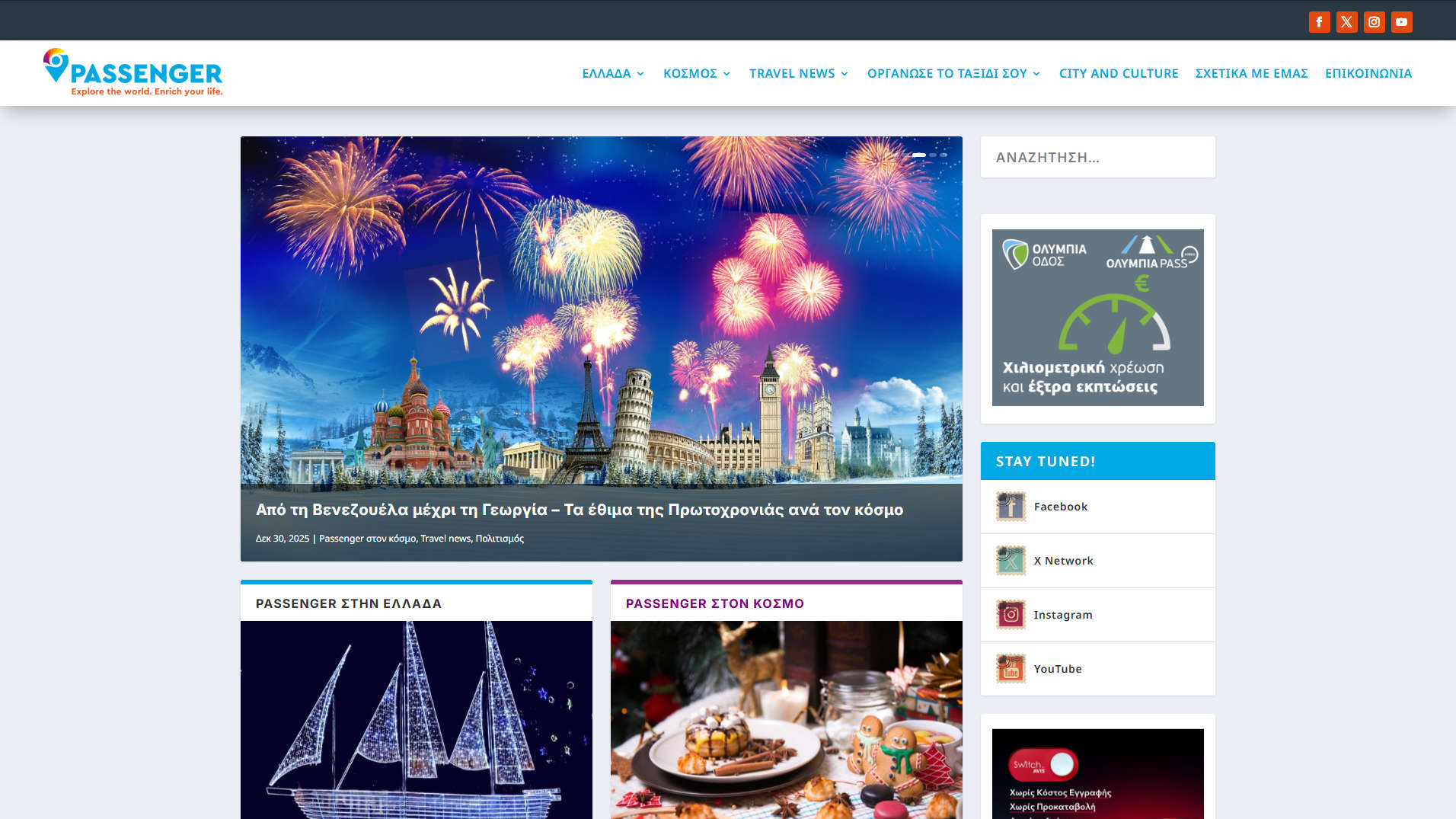

In September, the need for a redesign of passenger.gr was presented. Passenger is an informative website about travel news. The old website had several design problems as shown in the images below:
-
- Each published article was accompanied by a large image, which resembled an advertising banner
- The large number of images disoriented the visitors. There was no visual encouragement to focus on specific content.
- At the same time, the images significantly increased the website’s loading time.
Passenger.gr homepage – BEFORE
 The logic behind the redesign was to showcase the website’s content with an emphasis on readability, engagement, and achieving business goals. With the new design:
- We emphasize the readability of the titles.
- We display as many titles as possible in the same usable space, without tiring the reader’s eye with many images.
- We use the large slider as a possible display point for promoted content.
- We emphasize certain articles with large photos in relation to the rest.
- We guide the reader to the points we want them to focus their attention on.
Passenger.gr homepage – AFTER

- We keep the design simple and minimal to provide a pleasant reading experience with an emphasis on mobile phones and tablets.
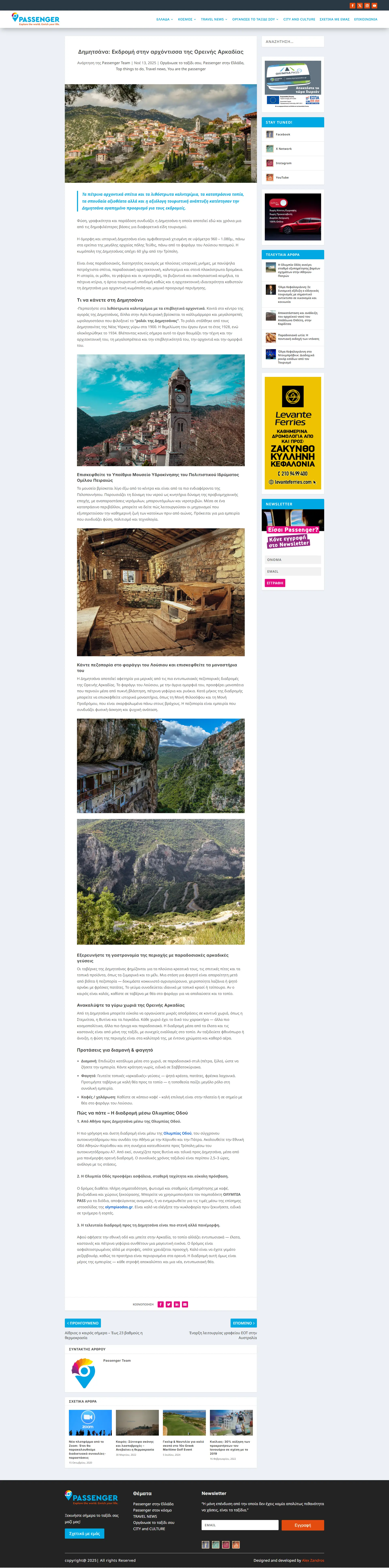
- We reduce the “noise” on the main category pages and on article pages. (see images below)
- At the same time, we use the colors of the logo to distinguish our units and give a modern tone.
- We use a carousel module and a tab module so that users can view as many titles as they want without using their mouse.
- We use a Sidebar to display advertisements and other interesting content (newsletter, social media, more articles)
- We end up in the footer section, where the user gains quick access to the website’s main menu.
Passenger.gr tab module

Passenger.gr category page – BEFORE

Passenger.gr category page – AFTER
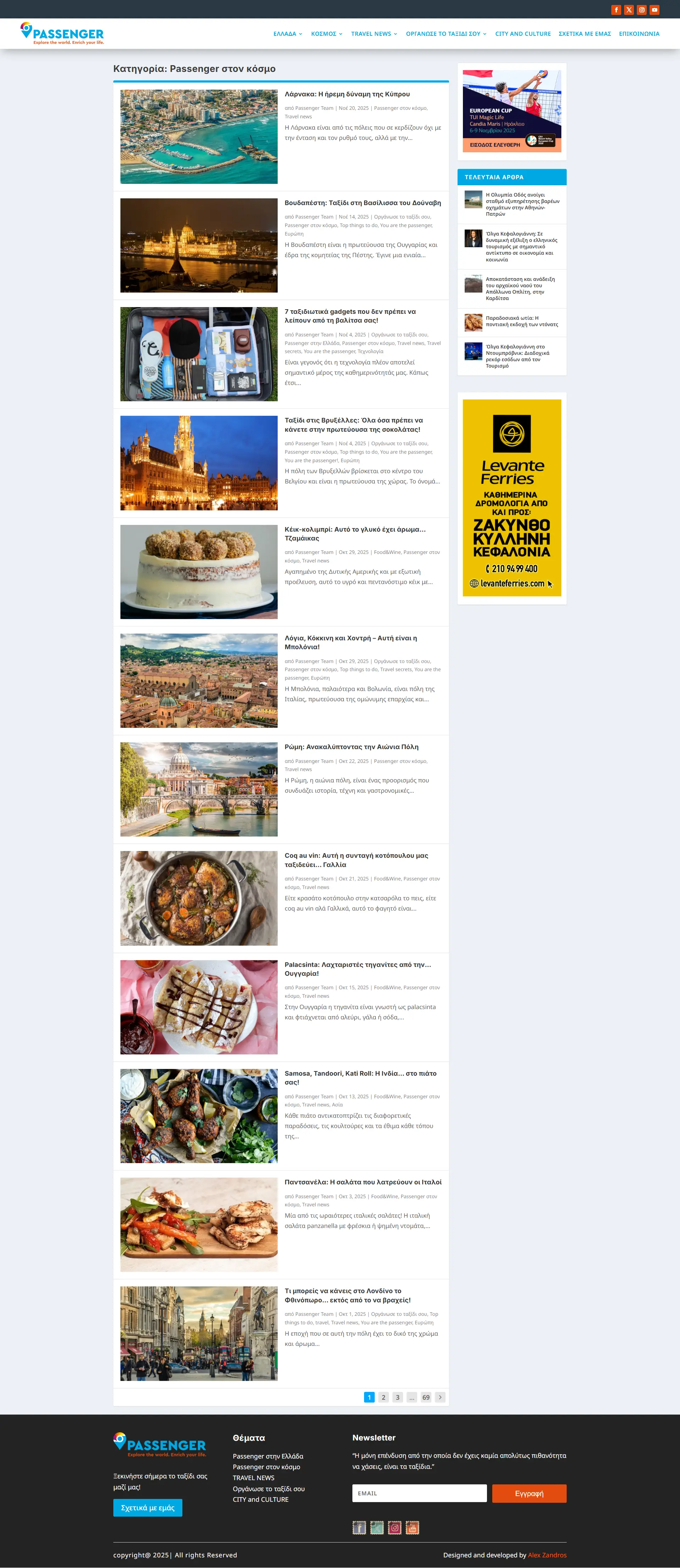
Passenger.gr article page – BEFORE

Passenger.gr article page – AFTER
Resolving Technical Issues
In addition to the design challenges, I had to resolve technical issues that had caused damage to the old website. This issue was created because the website was using a WordPress template that is no longer supported. The template’s manufacturer went out of business without notifying their customers. As a result, new versions of the specific software had not been released, resulting in security vulnerabilities. The issue was resolved by installing and configuring a new, modern template on which the new website was created. Finally, 10,000+ articles (along with their images) were safely transferred from the old website to the new one.